


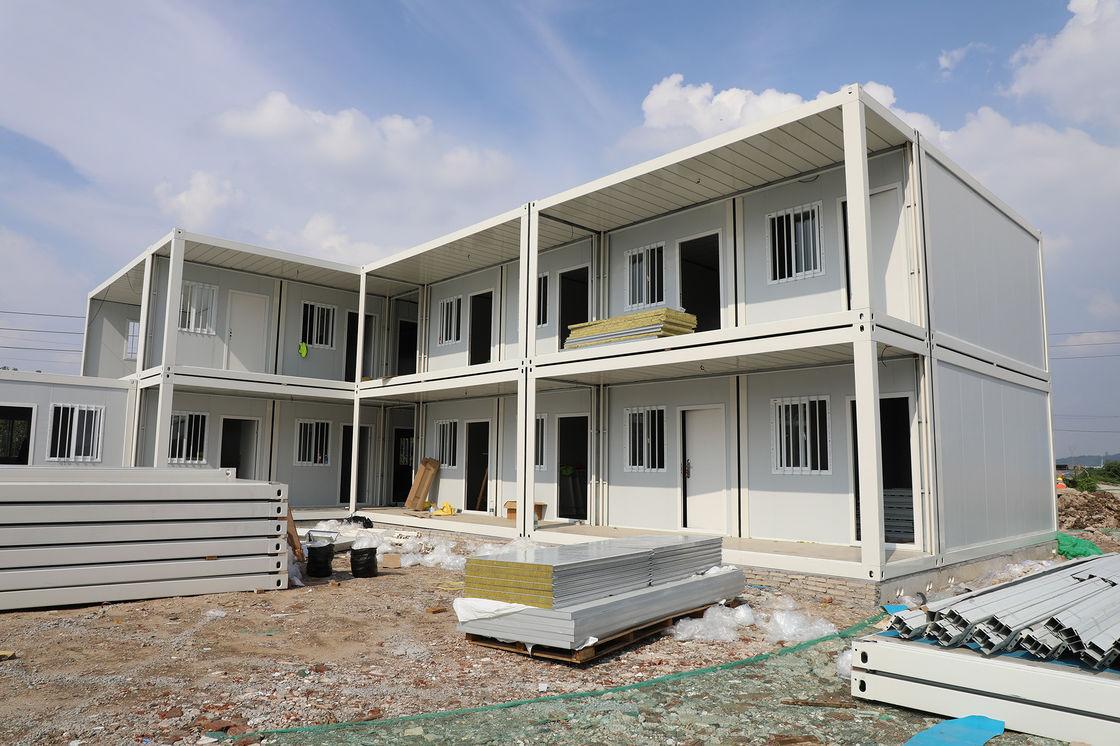


PU Sandwich Panel vs Rockwool Sandwich Panel
Sandwich panels have become essential in modern industrial, commercial, and modular construction. Whether you are building container houses, cold storage facilities, or large-scale logistics and industrial buildings, choosing the right panel material will significantly impact insulation performance, durability, safety, and long-term operating costs.
In this guide, Infinite Stars compares PU Sandwich Panels and Rockwool Sandwich Panels, helping you identify the ideal solution for your specific project.
1. What Is a PU Sandwich Panel?
A PU (Polyurethane) Sandwich Panel is made of steel sheets bonded with high-density PU foam. Known for exceptional insulation and waterproof performance, PU panels are widely used in applications requiring strict temperature control.
Key Advantages
- Ultra-low thermal conductivity: 0.024–0.026 W/m·K
- Excellent waterproofing (closed-cell structure)
- Lightweight with strong load-bearing performance
- Outstanding energy-saving performance — cold storage first choice

Common Applications
- Cold storage & refrigeration buildings
- Food processing plants
- Logistic centers
- Modular buildings requiring high insulation
- Container cold rooms
2. What Is a Rockwool Sandwich Panel?
A Rockwool Sandwich Panel consists of rock wool insulation placed between steel sheets. With a high fire rating and strong acoustic performance, rockwool panels are preferred in projects with stringent fire safety standards.
Key Advantages
- A1 fireproof rating (non-combustible)
- Excellent sound insulation
- High dimensional stability
- Good resistance to high temperatures and corrosion

Common Applications
- Commercial and industrial exterior walls
- Container houses and office blocks
- Fire-rated partitions
- Airports, schools, hospitals
- Buildings requiring soundproofing
3. Performance Comparison: PU vs Rockwool Panels
Below is the complete comparison to help you make an informed decision.
3.1 Thermal Insulation
| Material | Thermal Conductivity | Performance |
| PU Panel | 0.024–0.026 W/m·K | ★★★★★ Excellent |
| Rockwool Panel | 0.040–0.043 W/m·K | ★★★☆☆ Medium |
PU panels provide nearly double the insulation efficiency, making them ideal for cold rooms and temperature-controlled buildings.
3.2 Fire Resistance
| Material | Fire Rating | Performance |
| PU Panel | Not A1 | ★★★☆☆ |
| Rockwool Panel | A1 Non-combustible | ★★★★★ Best-in-class |
For projects requiring top-level fire protection, rockwool is the superior choice.
3.3 Waterproofing
- PU Panel: Completely waterproof due to closed-cell PU foam
- Rockwool Panel: Can absorb moisture unless manufactured with PU edge-sealing
PU performs significantly better in humid environments, rooftops, or coastal regions.
3.4 Sound Insulation
- Rockwool Panel: Excellent sound absorption
- PU Panel: Moderate sound insulation
For offices, worker accommodations, or noise-sensitive zones, rockwool is recommended.
3.5 Structural Strength
- PU Panels are lighter yet provide stronger bending resistance
- Highly suitable for roof systems and modular structures
- Rockwool panels are heavier but stable, often used for walls
3.6 Cost
- PU Panels: Higher material cost but lower long-term energy consumption
- Rockwool Panels: More cost-effective for large fire-rated buildings
4. PU Edge-Sealed Rockwool Panel: The Hybrid Solution
Infinite Stars also provides PU Edge-Sealed Rockwool Panels, a new generation panel that combines the strengths of both materials.
Advantages
- PU-sealed edges prevent water absorption
- Rockwool core ensures A1 fire rating
- Improved durability and panel flatness
- Ideal for exterior walls and roofing with strict fire & moisture requirements
Perfect for projects requiring fireproofing + insulation + waterproofing simultaneously.
5. Best Panel Choice for Different Applications
5.1 Container Houses (Living, Office, Accommodation)
| Application | Recommended Material | Reason |
| Living/Office Units | Rockwool Panel | Better sound insulation + fire safety |
| Roof Panels in Rain/Snow Regions | PU Panel | Waterproof + lightweight |
| Mid-to-High End Units | PU Edge-Sealed Rockwool | Balanced performance |
5.2 Cold Storage & Refrigeration
Best Material: PU Sandwich Panel
Why?
- Lowest thermal conductivity
- Reduced energy consumption
- Waterproof and moisture-resistant
- Long-term stable performance
Infinite Stars uses premium PU panels in all cold storage projects.
5.3 Industrial & Commercial Buildings
| Building Type | Recommended Panel |
| Warehouse / Factory | Rockwool or PU Edge-Sealed |
| Modular Office Buildings | Rockwool |
| High humidity environments | PU |
| Roof systems | PU |
6. Infinite Stars Project Showcase
Project 1 — Norway Modular Worker Dormitory
- Area: 3500㎡
- Material: Rockwool Wall Panels
- Benefit: Fire protection + sound insulation + cold climate resistance

Project 2 — Middle East Cold Storage Facility
- Material: PU Sandwich Panels
- Result: High energy efficiency & excellent temperature control

Project 3 — Modular Container Office
- Material Combination: PU Roof + Rockwool Walls
- Outcome: Strong structure + enhanced safety + thermal stability

7. Conclusion: Which Panel Should You Choose?
Infinite Stars Recommendations:
- Best insulation: PU Sandwich Panel
- Best fire protection & sound insulation: Rockwool Sandwich Panel
- Best overall balance: PU Edge-Sealed Rockwool Panel
Our sandwich panels are widely used in:
- Container houses
- Modular buildings
- Cold storage systems
- Industrial and commercial projects
If you're planning a project, Infinite Stars provides:
- Material selection guidance
- Architectural & structural solutions
- Complete project consulting
- Accurate, fast quotation support
Partner with Infinite Stars for high-performance sandwich panel solutions.