


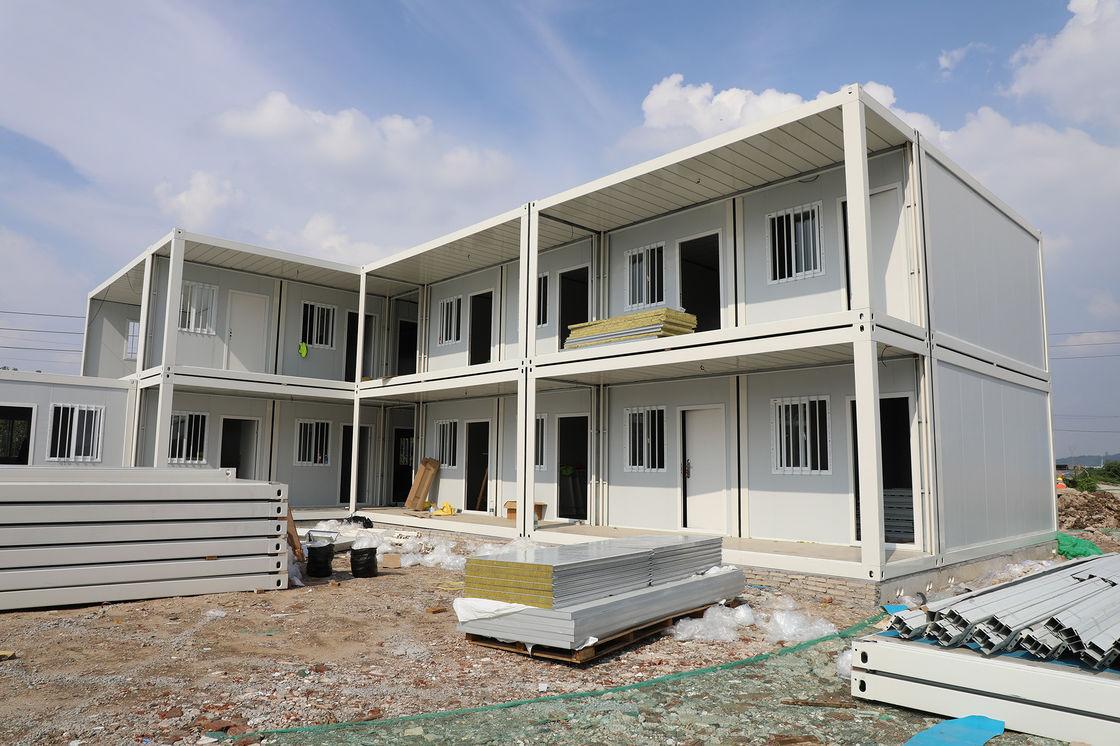


Rock Wool Sandwich Panels: Fireproof, Insulated & Durable Building Solutions
In modern construction, choosing the right insulation material is crucial for ensuring fire safety, thermal comfort, and acoustic performance. Among various options, rock wool sandwich panels have emerged as a reliable solution for industrial, commercial, and residential buildings. These panels not only provide superior thermal insulation but also excel in fire resistance and soundproofing, making them an ideal choice for high-performance construction.
What is a ROCK WOOL Sandwich Panel?
A rock wool sandwich panel is a composite building material consisting of two metal facings (typically steel or aluminum) bonded to a rock wool insulating core. The panels may have edge-sealed polyurethane or standard designs, providing flexibility for different applications.

Key features of rock wool sandwich panel:
- Fire-resistant, non-combustible core
- Excellent thermal insulation
- Superior acoustic performance
- Mechanical durability and stability
Applications:
- Industrial buildings: factories, warehouses, workshops
- Commercial spaces: shopping malls, offices, schools
- Residential projects: high-insulation homes and apartments
These panels are widely used for walls, roofs, and interior partitions, meeting stringent public building regulations.
What is the R-value of ROCKWOOL Sandwich Panel?
The R-value is a measure of thermal resistance, indicating how effectively a material resists heat flow. For rock wool sandwich panels, the R-value depends on the thickness and density of the rock wool core. Typical values are:
- 100 mm core thickness: R-value ~ 2.3–2.5 m²·K/W
- 150 mm core thickness: R-value ~ 3.5–3.8 m²·K/W
- 200 mm core thickness: R-value up to 5 m²·K/W
Compared to other insulation materials like PUR or PIR, rock wool panels provide good fire resistance with moderate R-values, making them suitable for applications where both thermal performance and fire safety are critical.
What is Rock Wool?
Rock wool is a natural insulating material made from basalt, a volcanic rock. The manufacturing process involves:
1. Heating basalt to approximately 1500°C until it melts
2. Spinning or blowing the molten material into fine fibers
3. Binding the fibers into blocks, rolls, or sandwich panel cores
Properties of rock wool:
- Fireproof and non-combustible
- Excellent thermal insulation
- High acoustic absorption
- Recyclable and environmentally friendly
Rock wool's fibrous structure traps air effectively, reducing heat transfer and providing sound dampening in noisy environments.
Composition and Types of Rock Wool Sandwich Panels
Rock wool sandwich panels consist of:
- Two metal facings (steel, aluminum, or color-coated panels)
- Rock wool core (with density around 100 kg/m³)
Common types and examples:
- JI Vulcasteel Wall (Smooth & Microrib)
- JI Vulcasteel Wall Alpha
- JI Vulcasteel Roof & Roof Alpha
Edge-sealed panels:
- Polyurethane edge-sealed panels prevent water absorption and deliquescence
- Provide higher bending strength, longer lifespan, and improved insulation compared to ordinary panels
Core Advantages of Rock Wool Sandwich panels
Fire Resistance
- Most rock wool panels are non-combustible
- Achieve high fire ratings (EI60 for 100 mm, EI120 for 200 mm cores)
- Comply with strict building fire codes
Thermal Insulation
- Low thermal conductivity ensures energy efficiency
- Reduces heating and cooling costs in buildings
Acoustic Performance
- Absorption index up to 0.85
- Noise reduction of ~30 dB, ideal for noisy environments
Durability
- Resistant to weather, temperature fluctuations, and humidity
- High mechanical strength and dimensional stability
Environmental Benefits
- Made from natural volcanic rock
- Recyclable and reduces energy consumption, lowering carbon footprint
Polyurethane Edge-Sealed Rock Wool Panels
Polyurethane edge-sealed rock wool panels enhance traditional rock wool panels by:
- Adding polyurethane seals on edges to prevent water ingress
- Improving bending resistance and load-bearing capacity
- Maintaining better thermal insulation and longer service life
Performance comparison:
| Feature | Polyurethane Edge-Sealed Panel | Ordinary Rock Wool Panel |
| Thermal Conductivity | ≤ 0.025 W/m·K | ≤ 0.043 W/m·K |
| Compressive Strength | ≥ 150 KPa | ≥ 100 KPa |
| Fire Resistance | Class A | Class A |
| Density | 80–120 kg/m² | 40–60 kg/m² |
| Sealing/Waterproof | Excellent | No edge sealing |
| Panel Lap | Hidden, extends lifespan | Exposed nails can corrode |
| Environmental Protection | Prevents exposure | Rock wool may be exposed |
PUR/PIR Sandwich Panels vs. Rock Wool Panels
PUR/PIR panels:
- Core: polyurethane or polyisocyanurate foam
- Very low thermal conductivity, lightweight
- Excellent strength-to-weight ratio
- PIR foam offers higher thermal stability and fire resistance
Rock wool panels:
- Core: non-combustible rock wool
- Slightly higher thermal conductivity
- Superior acoustic performance
- Ideal for sectorization and public building fire protection
Usage guide:
- PUR/PIR: cold storage, high thermal efficiency applications
- Rock wool: walls, partitions, and areas with high fire safety requirements
Applications of Rock Wool Sandwich Panels
- Industrial: factories, warehouses, workshops
- Public: schools, hospitals, commercial buildings
- Residential: high-insulation apartments, luxury homes
- Roofing, walls, and interior partitions
Conclusion
Rock wool sandwich panels provide a perfect balance of fire safety, thermal insulation, acoustic comfort, and durability. With options like polyurethane edge-sealed panels and various thicknesses, these panels meet the needs of modern construction while supporting energy efficiency and sustainability.
Choosing the right rock wool sandwich panel ensures safety, comfort, and long-term performance for your building projects.