

News




0102030405
What is Rockwool Sandwich Panel?
2025-09-26
Rockwool sandwich panels are advanced building materials widely used in prefabricated houses, industrial buildings, warehouses, and commercial facilities. They combine high-density rockwool insulation with durable steel or aluminum facings, offering excellent fire resistance, thermal insulation, and acoustic performance.
In this blog, we’ll explore the structure, benefits, technical specifications, and applications of rockwool sandwich panels, and compare them with polyurethane (PUR/PIR) panels to help you choose the most suitable option for your project.
What is Rockwool?
Rockwool, also known as stone wool or mineral wool, is made from natural volcanic rocks such as basalt and gabbro. The raw materials are melted at high temperatures (~1500°C) and spun into fibers, similar to cotton candy. These fibers are then compressed and bound to form rigid panels or blocks, which serve as the core in rockwool sandwich panels.

Key properties of rockwool:
-
Non-combustible, excellent fire resistance
-
Medium thermal insulation
-
Superior sound absorption
-
Moisture resistant and dimensionally stable
Structure of Rockwool Sandwich Panels
A standard rockwool sandwich panel consists of:
-
External and internal metal facings: Galvanized steel, aluminum, or stainless steel, often coated with polyester paint.
-
Rockwool core: High-density fibers (80–200 kg/m³), providing thermal, acoustic, and fireproof properties.
-
Adhesive layer: Polyurethane-based adhesive binds the rockwool to the metal sheets, ensuring durability and stiffness.
The material composition of rock wool sandwich panels

Panel sizes and specifications:
-
Thickness: 50–200 mm
-
Effective width: 950–1150 mm
-
Length: Customized, typically <12,000 mm
-
Thermal conductivity: λ = 0.043 W/mK
-
Acoustic insulation: 27 dB–NRC 0.80–0.95
-
Fire resistance: EI60–EI120
Advantages of Rockwool Sandwich Panels
-
Fire Safety
Rockwool is non-combustible and can resist high temperatures, helping prevent fire spread and protecting life and property. Panels achieve fire ratings from EI60 up to EI120, making them ideal for high-rise buildings, cold storage, and public facilities.
-
Thermal Insulation
Rockwool’s unique fiber structure reduces heat transfer, ensuring stable indoor temperatures. This decreases the demand for heating and cooling, saving energy and reducing operational costs over time.
-
Acoustic Performance
Thanks to its dense, fibrous core, rockwool absorbs sound effectively. It reduces external noise and reverberation, making it suitable for workshops, concert halls, clean rooms, or residential areas.
-
Durability
Rockwool panels resist moisture, temperature fluctuations, and mechanical stress. They maintain performance for over 25 years, ensuring a long-lasting, reliable insulation solution.
-
Fast Construction
Pre-fabricated panels are produced according to building layouts, allowing flexible and fast installation, reducing construction periods by 30–40%.
-
Environmental Sustainability
Made from natural volcanic rock, rockwool is recyclable and non-toxic, free from CFCs, HFCs, and asbestos. Its energy-saving properties contribute to eco-friendly construction.

Applications of Rockwool Sandwich Panels
Rockwool panels (内链:https://www.starscontainerhouse.com/rockwool-sandwich-panel/) are suitable for:
-
External and internal walls in industrial buildings
-
Partition walls and ceilings
-
Cold storage and food industry facilities
-
Warehouses, logistics centers, and agricultural buildings
-
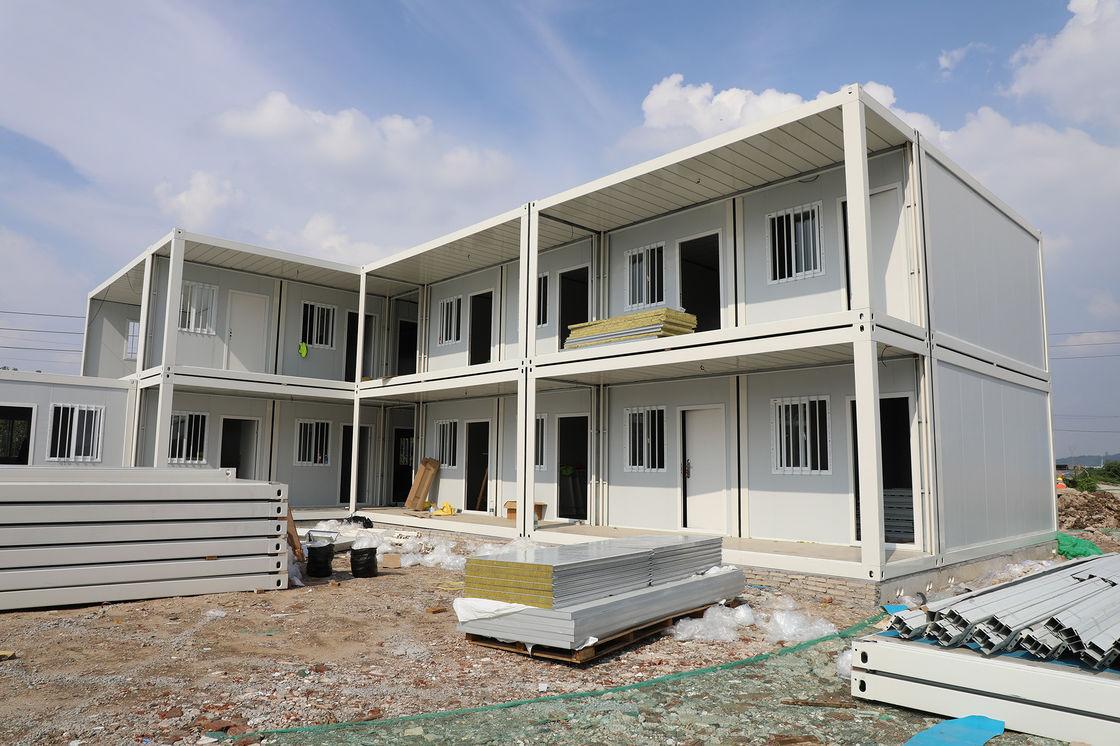
Prefabricated houses, offices, and sports halls
Rockwool Sandwich Panels VS Polyurethane Sandwich Panels: What Is More Suitable For Prefabricated Houses?
When choosing insulation for prefabricated houses, both rockwool and polyurethane (PUR/PIR) sandwich panels are popular options. However, they have distinct characteristics that make each suitable for different project requirements.
Thermal Insulation
-
PUR/PIR panels: Lower thermal conductivity, achieving the same insulation with thinner panels. Ideal for high-efficiency buildings.
-
Rockwool panels: Slightly thicker panels needed, but still effective for general prefabricated houses.
Fire Resistance
-
Rockwool panels: Non-combustible, high fire ratings (EI60–EI120), no toxic fumes.
-
PUR/PIR panels: Combustible, lower fire rating (B), may release harmful gases.
Acoustic Performance
-
Rockwool: Excellent sound absorption (NRC 0.80–0.95).
-
PUR/PIR: Moderate acoustic insulation.
Durability and Lifespan
-
Rockwool: Resistant to moisture and temperature changes, lifespan ≥25 years.
-
PUR/PIR: Lightweight, lifespan 20–30 years.
Weight and Installation
-
Rockwool: Heavier, requires metal fasteners, professional handling.
-
PUR/PIR: Lighter, tongue-and-groove fastening, faster installation.
Cost Considerations
-
Rockwool: Higher upfront cost, better fire safety, acoustic performance, and long-term stability.
-
PUR/PIR: Lower cost, suitable for small projects or residential prefabs.
Summary: For projects with strict fire, acoustic, and durability requirements, rockwool sandwich panels are preferred. For lightweight, cost-sensitive, and fast-installation projects, PUR/PIR panels may be more suitable.
Conclusion
Rockwool sandwich panels are a versatile, safe, and durable choice for prefabricated houses and industrial buildings. They combine fire resistance, thermal insulation, acoustic performance, and long-term durability in one solution. By comparing them with polyurethane panels, builders can make informed decisions based on project requirements, budget, and safety standards.
Investing in rockwool panels ensures energy savings, safety, and comfort, making them a reliable choice for modern construction.
Looking to improve your prefabricated house insulation? Contact our team to learn how rockwool sandwich panels can optimize fire safety, energy efficiency, and acoustic comfort for your project.